Start with what you know
Begin gently. As you answer correctly, Askesis gives you questions that ask a little more of you.
Independent maths practice
A little practice, a hint when you’re stuck, and a similar question to build on what you learned. Askesis helps children get into the habit of studying on their own.
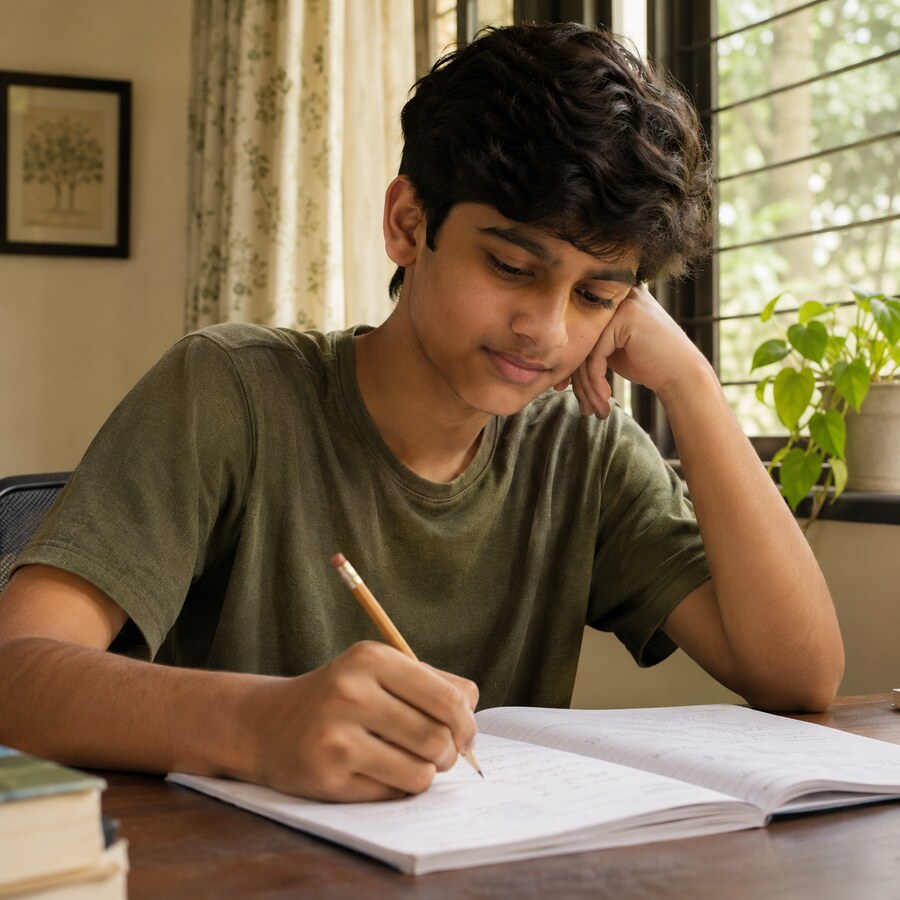
A note from your maths teacher
When I teach maths, I love hearing a child say, “Wait, let me try that myself.” I started Askesis to give children more chances to feel that way. They can choose when to sit down, work at their own pace and get a little help when they need it.
Whatever school board your child comes from, we start with a few simple questions. Their answers help Askesis choose what comes next. As they find their footing, the questions get more challenging. When they miss one, a similar question comes back later. Familiar ideas come up again after a gap to help them remember what they’ve learned.
A hint can help them take the next step. If they need more help, they can read the full solution and compare it with their own thinking. The practice is ungraded, so a mistake is simply a chance to try a different approach.
I’ve watched students grow more interested in maths and start coming back to practise on their own. For some, that growing understanding has shown up in their exam marks, too. If you’d like your child to explore Askesis, invite them to try a few questions and see what they make of it.
Anil · Maths teacher
How practice works
Begin gently. As you answer correctly, Askesis gives you questions that ask a little more of you.
Try a hint first. If you still can’t see a way through, read the full solution and see how each step follows.
Practise the same idea with a different question. Returning to it after a gap helps you remember it.
A sample question
Consecutive is the key! Let the middle number be x. The other two numbers are (x − 1) and (x + 1).
The sum is (x − 1) + x + (x + 1) = 3x. So 3x = 72 and x = 24.
From students and parents
Feedback will appear here as it is added.